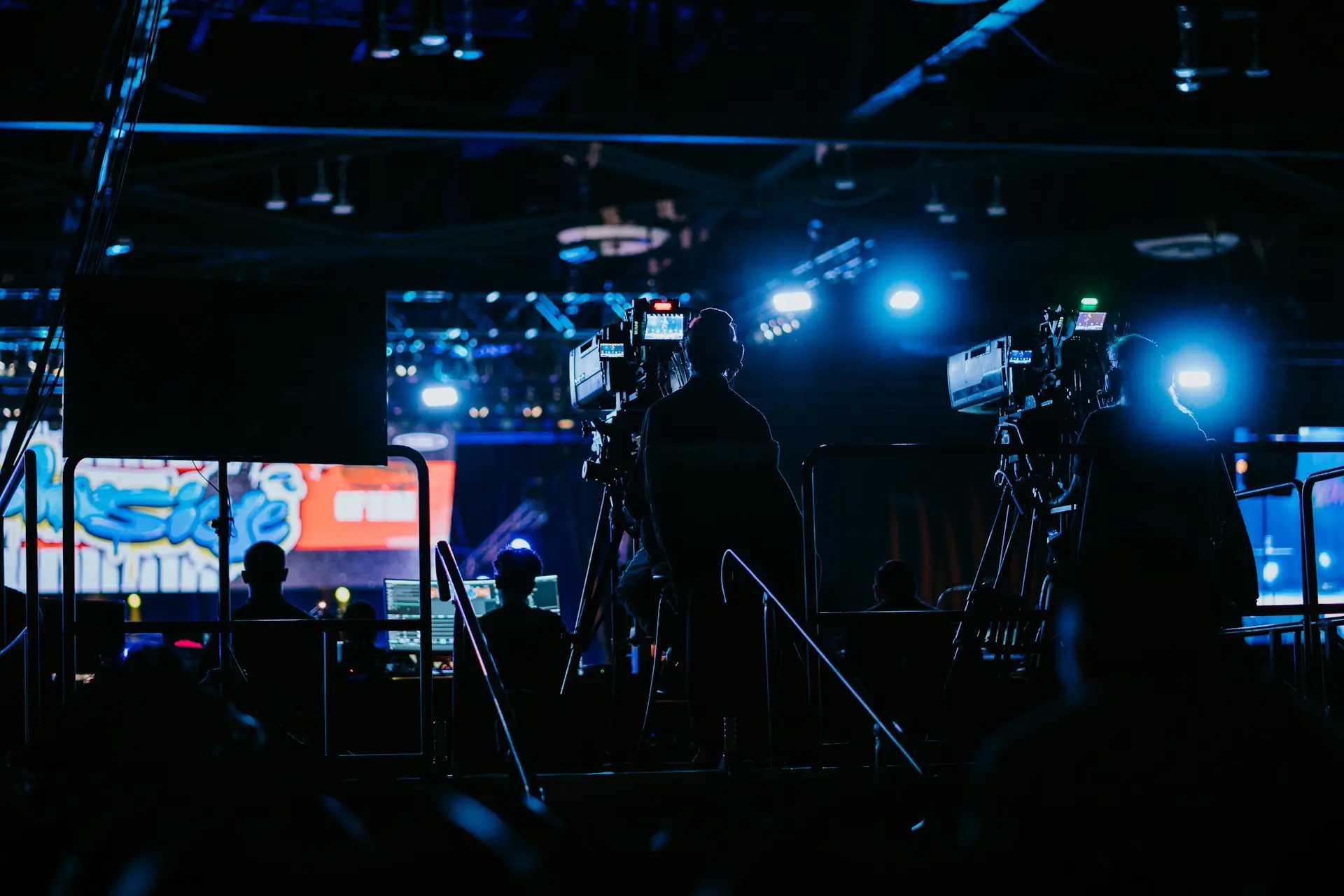

Event technical direction refers to the real-time coordination of sound, lighting and video during a professional event. It ensures coherence between equipment, crews and the running order, from preparation through to strike. Without a structured show control system, even the most capable equipment cannot guarantee a smooth and fully mastered event.
Whether you are organising a corporate conference, a product launch or a gala evening, understanding how show control works helps you collaborate effectively with your audiovisual service provider and anticipate the constraints of the day. This article covers the key roles, the organisation behind the scenes, and the concrete run of show of an event technical direction team.
What is event technical direction?
Event technical direction refers to the full set of people, equipment and processes that enable real-time management of the technical aspects of an event. It covers sound, lighting, video and stage coordination. The technical direction desk is the command centre from which all technical decisions are made during the show or conference.
The concept comes from live performance and broadcast. In the events context, it applies to any professional gathering requiring coordinated technical management: corporate seminars, congresses, gala evenings, award ceremonies, company concerts and product presentations. The complexity of the technical direction setup varies according to the size of the event, the number of sources (microphones, cameras, projectors) and the requirements of the programme.
Sound, lighting and video show control is not simply a matter of operating a dashboard. It involves a precise human chain: the general technical director, the specialist technicians and the stage teams work in synergy so that each sequence flows without interruption. This coordination is what distinguishes an experienced audiovisual service provider from a simple equipment rental company.
The roles within a technical direction team: who does what?
Event technical direction relies on clearly defined roles, each specialised in a specific technical domain. Below are the main positions found on a medium to large production:
| Role | Main mission | Task examples |
|---|---|---|
| General technical director | Overall coordination of show control, single technical point of contact | Reading the running order, calling cues, managing contingencies, liaising with the organiser |
| Sound technician | Managing sound reinforcement and audio delivery | Microphone and console setup, soundcheck, monitor management, live mixing |
| Lighting technician | Programming and operating stage lighting | Creating lighting scenes, running the DMX console, dynamic effects, house ambiences |
| Video technician | Managing video sources and screen output | Source switching, video mixer operation, PowerPoint display, conference confidence monitors |
| Stage manager | Organising the stage space and speaker flow | Speaker positioning, managing stage entrances and exits, cue lights, RF handover |
| Broadcast sound engineer | Audio capture and processing for broadcast or streaming productions | Live sound treatment, compression, equalisation, feed to broadcast control room |
| Network / IT technician | Managing digital signal flows and connectivity | Event network, NDI flows, streaming, cybersecurity of connected equipment |
The general technical director is the cornerstone of the operation. They hold the running order, call cues to each team and make real-time decisions. They are the direct point of contact for the organiser on the day, allowing the organiser to manage a single technical interface throughout the event.
Organising event technical direction: from preparation to dress rehearsal
Organising event technical direction begins well before the event day itself. The preparation phase is often as long as the event, and it directly determines how smoothly the live operation will run.
The technical rider and brief
Everything starts from a precise technical rider: a reference document shared between the organiser and the service provider, listing the planned equipment, room layouts, power supply constraints, site access details and the requirements of each speaker or performer. A well-completed technical rider prevents unpleasant surprises during load-in and ensures every technician arrives on site with the right information.
The technical rider typically includes: the stage plan showing equipment positions, the gear list (microphones, mixing consoles, projectors, screens, video servers), the installation schedule and delivery times, and the organiser's specific requirements (brand guidelines, video content, music sequences).
The schedule and technical checks
The show control schedule sets out each phase: load-in, technical checks, dress rehearsal and live operation. Technical checks are the adjustment sessions carried out after load-in: verifying sound levels in the actual room, testing projectors on the real stage, checking video sources under final lighting conditions.
Technical checks allow problems to be identified and corrected before the audience arrives. They are essential whenever the event includes video sequences, multiple speakers or programmed lighting effects. On large productions, several rounds of checks are typically planned.
The dress rehearsal
The dress rehearsal is the complete run-through of the event under real conditions, with speakers, the running order and all show control teams in place. It tests the synchronisation between the programme and the technical elements: lighting transitions at speaking moments, video triggering, RF microphone handover.
A well-run dress rehearsal exposes friction points: a sequence running over time, a microphone causing feedback in certain positions, a screen reflecting room light. Fixing these issues before the event day is infinitely simpler than intervening in front of a live audience.
The run of show on event day: from doors open to strike
On the day of the event, event technical direction switches into live operation mode. Teams are in position from the morning, often several hours before doors open.
Load-in and setup
The technical load-in systematically precedes any audience arrival. Teams install and cable equipment according to the plan set out in the technical rider: room sound reinforcement, projector and control desk rigging, screen and video source setup. Each position is tested individually before being integrated into the overall system.
Load-in duration depends on the complexity of the production. A straightforward conference can be set up in a few hours. A gala with programmed lighting effects, video mapping and multi-camera capture may require one to two full days before the dress rehearsal.
Live operation
During the event, the general technical director drives all teams from the running order. They call each sequence by intercom or radio, synchronise technician interventions and ensure the programme timing is maintained. This is sustained, concentration-intensive coordination where every decision must be made quickly and without hesitation.
Sound, lighting and video show control operates in real time: sound technicians manage levels at each speaking moment, lighting technicians adapt ambiences to the programme sequences, video technicians switch sources and display content at precisely the right moment. The precision of this coordination determines the perceived quality of the event for the audience.
Managing contingencies
Event technical direction is also the system that absorbs contingencies. A speaker who is absent, a presentation changed at the last minute, a piece of equipment that fails: all situations the general technical director must anticipate and manage without the audience noticing.
An experienced service provider prepares backup solutions: redundant equipment for critical microphones and video feeds, a plan B for video sequences, emergency procedures for power failures. Contingency management cannot be improvised: it is planned during the design phase of the show control setup.
The most frequent contingencies in event technical direction relate to cabling (missing adaptors, faulty cables), external sources (speaker laptops with incompatible outputs, unreadable USB drives), and programme shifts (speeches running longer than planned, modified breaks). An experienced show control operator anticipates these situations and has the tools to handle them.
Why entrust show control to a specialist audiovisual provider?
Entrusting event technical direction to a specialist provider ensures complete continuity between the design of the system and its live operation on the day. The same teams who prepared the technical rider, took part in the technical checks and ran the dress rehearsal operate the show control desk in live: the continuity is total.
A specialist audiovisual events provider brings several decisive advantages. Their equipment knowledge allows them to size the system correctly for each venue configuration. Their experience of similar productions gives them proven reflexes in unexpected situations. Their ability to quickly mobilise replacement equipment prevents prolonged interruptions in the event of a failure.
VLS has been providing event technical direction for professional productions since 1983, from corporate conferences to large-scale outdoor shows. Our teams handle the complete chain: technical rider, load-in, technical checks, dress rehearsal, live operation and strike. Contact us to discuss the technical direction of your next event.
For a broader overview of audiovisual technical services, see our article on audiovisual technical services and explore our recent productions. You can also discover our full event expertise.
FAQ: event technical direction and show control
What does a general technical director do at an event?
The general technical director is the technical lead on the provider side. They coordinate all show control teams (sound, lighting, video, stage), read the running order and call cues at each sequence. They are the single technical point of contact for the organiser throughout the event day. Their role is both technical and human: managing the pressure of live operation, communicating clearly and making rapid decisions when contingencies arise.
What is the difference between a sound desk and a general show control desk?
The sound desk specifically manages audio: the mixing console, signal processing and room delivery. The general show control desk encompasses all technical positions (sound, lighting, video, stage) and their coordination. On smaller productions, a single technician may cover several positions. On large productions, each domain has its own specialist desk, all connected to the general show control position by intercom.
How long does it take to set up an event technical direction system?
Setup time depends directly on the complexity of the system and the venue configuration. A simple conference sound reinforcement can be installed in two to three hours. A full production with programmed stage lighting, multiple screens, video capture and mapping effects may require one to two full days before the dress rehearsal. The load-in schedule is always defined in advance during preparation with the provider.
What is a running order in event technical direction?
The running order is the reference document listing every event sequence in chronological order, along with the associated technical cues: triggering a video, a lighting change, a microphone transition, a speaker entrance. It is prepared in advance by the general technical director with the organiser and serves as the live guide throughout the event. A precise running order is the foundation of smooth show control.
What is the purpose of a dress rehearsal in event technical direction?
The dress rehearsal is the full run-through of the event under real conditions, with all show control teams and, ideally, the speakers. It tests the synchronisation between the programme and the technical elements, identifies friction points and allows them to be corrected before the event day. On complex productions, several dress rehearsals may be organised. A dress rehearsal is essential whenever the event includes video sequences, programmed lighting or multiple speakers.
What is a technical rider in the events industry?
A technical rider is the reference document shared between the organiser and the audiovisual provider before the event. It lists the planned equipment, the stage plan, the venue's power and access constraints, each speaker's requirements and the content to be integrated (videos, presentations, music). A well-completed technical rider ensures every technician arrives on site with the correct information and minimises contingencies during load-in.
How does the strike work after an event?
Strike follows a procedure that is the reverse of load-in: equipment is deinstalled, packed and inventoried position by position. The general technical director supervises the operation to ensure nothing is missed and the venue is returned to the agreed condition. Strike duration is built into the overall production schedule and planned in advance with the provider. A post-event technical debrief is also commonly carried out to capture lessons learned.
Can VLS manage the technical direction of an outdoor event?
Yes. VLS provides event technical direction for both indoor and outdoor productions, including shows with large-format projection, architectural mapping, open-air sound reinforcement and multi-camera video capture. Based in Buc, Ile-de-France, VLS teams operate across France. Contact us at vls.fr/en/contact to discuss your project and receive a tailored proposal.
Read also: Audiovisual technical services: definition and run of show | VLS event expertise | Recent VLS productions
