
A well-designed LED wall changes everything in a room. The image is sharp, the colors are vivid, and the message gets across, even with the lights on.
If chosen poorly, the opposite happens. Pixels are visible from the front row, the screen is too bright for the room, or the image flickers on camera. These flaws are immediately noticeable and can be costly to your brand image.
At VLS, an audiovisual event provider, we install LED walls for conventions, product launches, fashion shows, concerts, and projects involving live performance. Here is what you need to know before confirming your next event LED wall, or deciding whether to opt for a video projector when the project calls for it.
LED wall, video projection, or LCD: which technology should you choose?
Before discussing pixel pitch, you need to compare display solutions. Each has its place inconsumer audiovisuals events.
- The television or LCD monitor. You can find televisionsand themonitors in large sizes, as Full HD, inUHD or as Ultra HD. Some consumer models (Philips, for example) include a DTT, which is of no interest for events. Their diagonal is measured in inches. They are suitable for small spaces: meeting rooms, booths, stage monitors. A touchscreen is useful for an interactive kiosk. Beyond that, the image becomes limited. screens like home cinema or video games are designed for the living room, not for a room of 300 people.
- Video projection. A video projector(orvideo projector) allows you to project an image onto a projection screen. The old overhead projector is a thing of the past. A entry-level HD projector is judged by its power in lumens (ANSI), its technology (DLP, LCD, laser) and its focal length. A short-throw(orshort-throw lens) allows for a large projected image at a short throw distance. A lens with optical zoom adjusts the screen size depending on the room. The output also depends on the projection surface. Older models operate with a bulb. The lamp wears out and loses brightness. Recent models use a light source laser, which is more durable. projection of high quality require a dark room and a good screen. Beware of false value formoney: an office model does not make a projector for a convention.
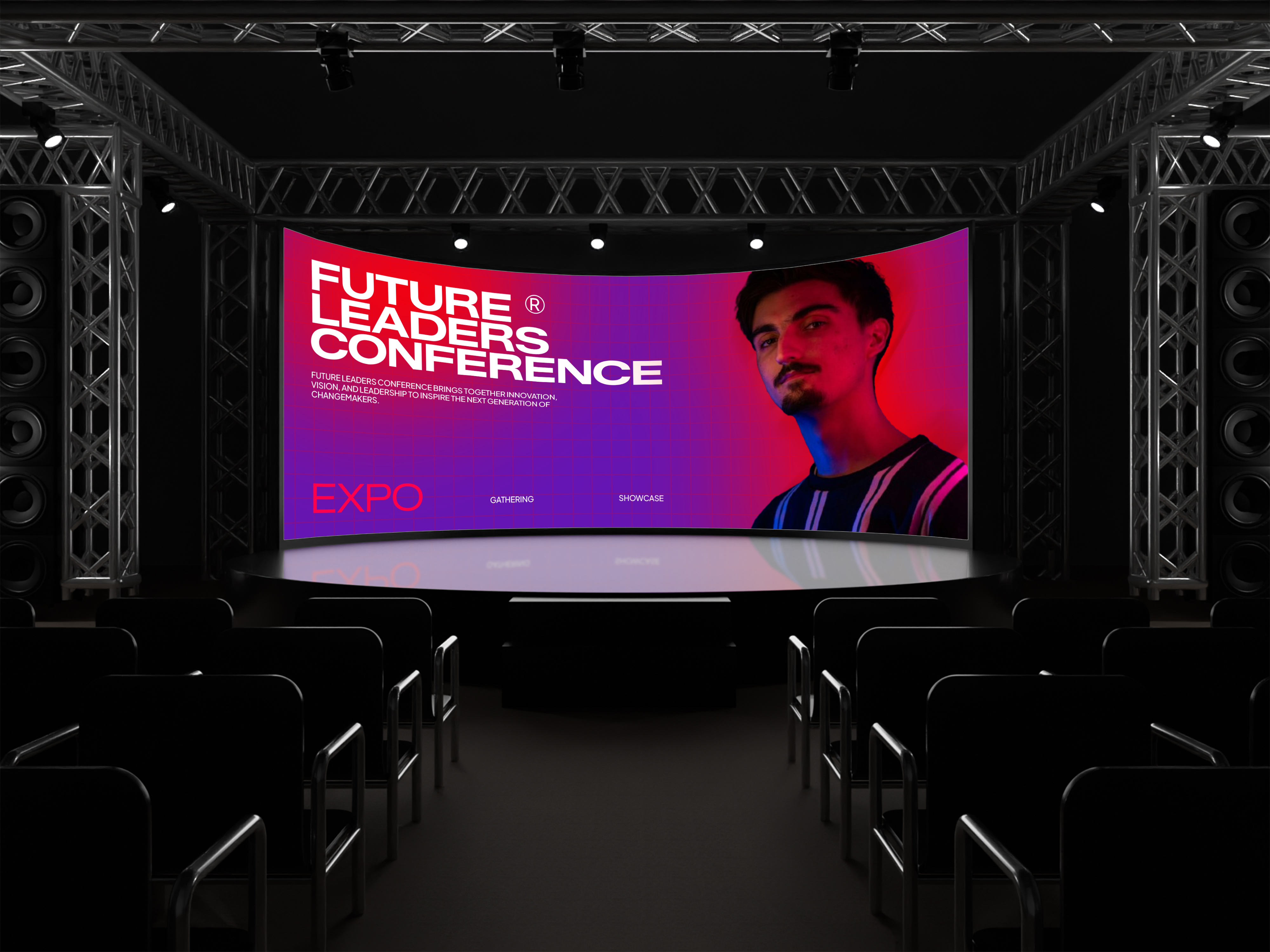
- The LED wall. It emits its own light. It remains readable in a lit room, under stage spotlights, or in a glass-walled space. Its image bright offers high contrast and deep blacks. It works with LEDs assembled into modular panels. You can make it wide, tall, curved, or custom-built. It offers a true large screen, without a screen, in a cinema room as well as on stage.
Indoors, the LED wall is becoming increasingly popular. Video projection remains relevant for very large formats, tight budgets, or atypical surfaces. For heritage facades, video mapping remains the best solution.
Event projectors: key criteria to know
Thevideo projector remains a valuable tool. When chosen well, it offers a projected image that is spectacular on a reasonable budget. Here is how to choose one.
Brightness in lumens. It determines the brightness of theprojected image. Manufacturers advertise ANSI lumens , which are more reliable than marketing figures. For a room with controlled lighting, 5,000 to 7,000 ANSI lumens are often suitable for a projection screen of 3 to 4 meters. For a large room or a very wide image, you should go up to 10,000 lumens or more, sometimes using several projectors side-by-side. An entry-level HD projector entry-level model designed for an office will not be enough.
Focal length and projection distance. The focal length determines the image size at a given distance. We use the throw ratio: the projection distance divided by the image width. With a ratio of 1.5, a 4-meter-wide image requires about 6 meters of clearance. A short-throw(orshort-throw lens) reduces this required distance, which is useful in a narrow room. A lens with optical zoom offers more flexibility to adjust the screen size on the day of installation.
The projection surface. It matters just as much as the video projector. An projection surface irregular or overly bright surface degrades the image. The projection screen must be taut, suited to the ambient light and the intended format. In rear projection, the video projector is placed behind a translucent screen. The equipment remains invisible, a plus for polished stage designs. This setup replaces the old overhead projector used for overhead transparencies.
Technology and the light source. Les DLP projectors dominate the events industry, offering good contrast and stable colors. LCD models are also available. In terms of light source, laser is gradually replacing thetraditional bulb . The lamp ages, needs replacing, and loses power over time. Laser lasts longer and requires less maintenance.
The right value for money. A projector quality comes at a price, but the visual impact justifies the investment for a convention. Compare the value for moneyover the long term: maintenance, replacement, technician costs, and reliability on the big day.
Ultimately, successful projection rely on a trio: a good projector, a good surface, and a well-prepared room. Without these three elements, even the best equipment will disappoint.
Pixel pitch: the criterion everyone mentions, but few understand
Pixel pitch is the distance between two pixels, expressed in millimeters. The smaller it is, the sharper the image. This is what we call high-resolution.
Simple rule: the minimum comfortable viewing distance in meters is roughly equal to the pixel pitch value in millimeters. A 2.6 mm pitch can be viewed comfortably from about 2.6 meters away.
Here are our field benchmarks:
- 1.5 to 1.9 mm pitch : very close audience, stage, booth, close-up filming.
- 2.6 to 3.9 mm pitch : convention, seminar, conference room. This is the right compromise for most projects.
- 4.8 mm pitch and above : large venues, concerts, outdoors, distant audience.
Classic mistake: choosing a very fine pitch "to be safe" causes the budget to skyrocket, with no benefit if the audience is ten meters away. Conversely, a pitch that is too wide will bother the front row.
The right question isn't "what is the best pitch?". It's: "where are your guests sitting?"
Resolution and HDR: what do you really need?
There are a lot of acronyms out there. Here is how to make sense of them.
Thehigh-definition (Full HD, 1920 × 1080) remains the most common standard for events. It is sufficient for producing HD images that are sharp enough for most venues.UHDor theUltra HD (4K) provides more detail, which is useful for very large screens or demanding video shoots. HDR improves the contrast range and color richness. It only makes sense if the entire chain supports it: source, control system, processor, and panels.
On a very large LED wall, the resolution can exceed 4K. The control system then adapts the signal.
Brightness: too much power can also be a problem
Outdoors, an LED wall has to compete with the sun. It needs several thousand nits.
Indoors, it's a different story. A screen that is too bright in a dark room strains the eyes and dazzles the front rows. Our technicians calibrate the brightness on-site, depending on the room, the stage lighting, and the content.
For comparison, a video projector is measured in lumens. The two units are not comparable, which is precisely why an expert provider should guide you. Always ask them how they adjust the brightness. A precise answer is a good sign of professionalism.
Recording: the trap you discover too late
Are you filming your event? Are you broadcasting it live? Then the LED wall becomes a technical subject in its own right.
A poor-quality LED wall can cause the following on camera:
- dark bands scrolling across the screen (flicker);
- color variations from one module to another;
- a moiré effect on images filmed at close range.
The solution lies in panels with a high refresh rate, a good video processor, and settings tested with the actual cameras used for the event. This is a key point for any hybrid event or live recording.
Our standard practice: test the wall with the camera and lens being used on the big day. Always. Never "we'll see when we get there."
Connectivity and signals: the link between the source and the screen
A beautiful LED wall is useless if the signal doesn't get through. comprehensive and reliable connectivity is a subject that is too often overlooked.
- HDMI is the most common format on laptops and players, including a Blu-ray for a brand video. A good HDMI cable is convenient, but limited in length.
- VGA, while older, is still found on some equipment. A converter is necessary.
- SDI is the gold standard in professional production. It transmits signals over long distances reliably.
- Ethernet, fiber optics, or network solutions take over for very long distances. The Bluetooth should be avoided for critical signals.
Theconnectivity must be checked beforehand, with presentations tested on-site. A remote control backup and a pixel-by-pixel pixel check prevent any surprises. The speakers built-in speakers of a projector are never enough: you need a proper sound system, not just a simple speakerorspeaker auxiliary speaker.
Thevideo control room centralizes these sources. It uses a switcher or media server to manage content, transitions, and outputs. A mix clean video allows you to play a presentation, film, live stream, or graphic overlay without any interruptions. On complex projects, several control rooms elements can work together: video, sound, and lighting.
A quick tip: provide your files in a simple format, along with a backup copy.
The video control room: the brain of the display
An LED wall or projector is only as good as what feeds it. The video control room video control room is the command center for the entire image. It brings together a video switcher, a media server, and signal converters.
Theswitcher allows you to switch between sources live: presentations, films, cameras, or graphic overlays. It applies clean transitions without cuts or image jumps. The media server, meanwhile, splits the signal for large LED walls or multiple projectors.
Thevideo technician follows the minute-by-minute schedule. They launch videos, manage slide changes, alert speakers, and react to any unforeseen issues. At a convention, their role is just as important as that of the sound or lighting technician. Our advice: verify the sequences during rehearsals, using all files and all presentation computers.
Structure, weight, power: what you don't see
An LED wall is heavy and power-hungry equipment. Three questions to ask during the site survey.
How is it installed? On the ground (stacked), suspended from a truss, or fixed to a self-supporting structure. Each solution has its own load and safety constraints.
Can the venue support it? Ceiling height, authorized rigging points, and floor load capacity. In heritage buildings, you cannot drill into anything. In such cases, an independent structure must be designed.
Is there enough electrical power? A large LED wall requires a dedicated and properly sized power supply. This is an event technical issue that must be addressed before, not during, the setup.
A thorough technical site survey resolves these points in advance. It is the one step we never skip.
Content: a beautiful wall with poor visuals is still a poor wall
The best screen in the world won't save poorly adapted content. Before finalizing your setup, check these three things.
- The format. A 12 × 3 m wall doesn't have the same aspect ratio as a standard presentation. You need to adapt your slides or create custom visuals.
- Readability. Larger text, higher contrast, and less information per screen.
- The source. A video control room dedicated system controls everything and plays each video at the right time.
Allow time for calibration: content that looks fine on your computer might appear blurry or cropped on an LED wall.
How much time and budget should you plan for?
The budget depends on the surface area, pixel pitch, installation, duration, and technical production. It's impossible to provide a reliable figure without knowing the venue.
An LED wall is rarely the only expense. It requires a support structure, technical production, appropriate lighting, and often a sound system. It’s the combination of these elements that creates the experience.
Our advice: contact your provider during the briefing phase, not after the venue and set design have already been finalized.
6 questions to ask your provider
- What pixel pitch do you recommend, and why?
- Have you tested this equipment for video recording?
- How will it be installed in this specific location?
- Who is running the video control room on the day of the event?
- What happens if a module or processor fails?
- What content formats do I need to provide, and by when?
FAQ: Event LED walls
What is the difference between an LED wall and a giant screen?
An LED wall is made up of assembled modules. It can be any size or shape. A giant screen is a single unit, which is less flexible and often less bright.
LED wall or video projector: which should I choose?
An LED wall is brighter and offers better contrast, making it ideal for lit rooms. A video projector remains a good option for very large formats or tighter budgets. A site survey will help you decide.
What pixel pitch should I choose for a 300-person convention?
In most rooms, a pixel pitch between 2.6 and 3.9 mm is suitable. It all depends on the distance between the front row and the screen.
Can an LED wall be used outdoors?
Yes, using specific panels: they are brighter, waterproof, and more robust. Weather conditions and structural safety must be planned for in advance.
Can you film an LED wall without flickering?
Yes, with the right equipment, precise settings, and a test run with the cameras being used.
How long does it take to set up an LED wall?
It varies from a few hours to several days depending on the size, structure, and complexity of the control system. A realistic schedule is included in the quote.
What throw distance should I plan for a video projector?
It depends on the lens focal length and the desired image width. With a throw ratio of 1.5, a 4-meter image requires about 6 meters. A short-throw lens reduces this distance. A site survey allows us to calculate it precisely.
How many lumens are needed for an event video projector?
For a room with controlled lighting and a 3 to 4-meter screen, 5,000 to 7,000 ANSI lumens are usually sufficient. For larger images, you need to go up to 10,000 lumens or more. The level of ambient light is the deciding factor.
Do I need a projection screen, or can I project onto a wall?
A projection screen provides better contrast and a more uniform image. A wall can work for simple content, but its surface is rarely perfect for projection.
How do I connect a laptop to an LED wall or projector?
The most common method is an HDMI cable, with a converter if needed. VGA is still found in older installations. The technical team will verify connectivity before the event.
A successful LED wall requires early planning
Choosing an event LED wall is about more than just a spec sheet. It’s a balance between the venue, the audience, the content, the filming, and safety.
VLS has been supporting clients since 1985, from site surveys to teardown, for conventions, product launches, and premium events. Planning a project? Let's talk about it now: contact the VLS team for technical advice and a custom quote.
nical advice and a custom quote.
