

Video mapping involves projecting animations onto three-dimensional surfaces (facades, stages, objects) to create immersive visual experiences for events, brands, and cultural heritage sites. Over the last decade, video mapping has established itself as one of the most powerful tools in event communication. From sound and light shows to product launches and outdoor marketing activations, projection mapping transforms any physical surface into a living, narrative stage. According to market analysts, the projection mapping sector is seeing annual global growth of over 20%, driven by the increased accessibility of high-power video projectors and 3D mapping software. However, behind the spectacular effect lies a demanding technical discipline. Equipment, software, site constraints, budget, and creativity: every parameter counts. This guide will help you understand video mapping in its entirety and make the right decisions for your project.
Video mapping: a technology at the crossroads of technique and creativity
Video mapping, also known as projection mapping or architectural mapping, is a technique that involves projecting video content onto non-flat surfaces while accounting for their exact geometry. Unlike traditional projection onto a flat screen, mapping incorporates the volumes, edges, and reliefs of the surface into the very design of the animations. The physical surface becomes an active element of the show rather than just a passive screen. What fundamentally distinguishes video mapping from ordinary projection is the calibration phase: every pixel of the video feed is precisely aligned with a specific point on the real-world surface. The result is a striking optical illusion where the building or object appears to transform, come to life, or tell a story. The global projection mapping market is now worth over $4 billion and is growing by 20% to 25% per year according to industry studies, driven by corporate events, cultural festivals, and large-scale brand activations.
- Projection mapping : active technology that uses the geometry of the surface as a foundation for visual creation.
- Event video mapping : the most common application, used both indoors and outdoors.
- Interactive mapping : an advanced version that reacts to audience movement or actions in real time.
How does video mapping work?
The three key stages:
Stage 1: Surface modeling
Every video mapping project begins with a precise analysis of the surface. The volumes, contours, reliefs, and textures of the surface are digitized via 3D scanning or manual modeling to create an accurate digital model. This base is what allows the animations to be aligned with precision. Approximate modeling inevitably leads to visible misalignments on the night of the event.
Stage 2: Video content creation
The animations are then designed or adapted to leverage the geometry of the surface rather than working around it. Good video mapping content doesn't just slap a video onto a facade; it plays with the recesses, protrusions, and architectural symmetries to create coherence between the real and the projected. This creative phase is what makes the difference between a generic visual effect and a memorable show.
Stage 3: Calibration and projection
High-power video projectors are strategically positioned on the ground, on structures, or at a distance, depending on the surface. Mapping software synchronizes the video feed pixel-by-pixel with the actual surface, correcting distortions caused by the projection angle and the irregularities of the surface. This calibration phase can take several hours and requires an experienced technical team.
- 3D modeling : an essential foundation for mapping precision, whether via scan or manual survey.
- Content creation : must leverage the surface's volumes, not simply ignore them.
- Calibration : a critical phase that requires expertise and sufficient time before the event.
- Video projectors : power adapted to the size of the surface and the ambient lighting.
- Software : MadMapper, Resolume Arena, HeavyM, Disguise—each suited to a specific type of project.
The main uses of video mapping
Events: creating a lasting moment
Events are the natural playground for video mapping. From gala dinners and corporate seminars to concerts and flagship store openings, projection mapping transforms any space or object into a bespoke immersive set. At VLS, we demonstrated this with a particularly striking project: a 3D mapping project created on a Ferrari 488 Spider for Scuderia Lebanon, in Beirut. Every curve of the bodywork was 3D modeled, laser-scanned, and then dressed with animations that made the vehicle seem to literally come to life, all accompanied by spatialized 3D sound. A unique, memorable, and naturally viral moment.
Marketing and brand experience: the visual storytelling tool
Video mapping has become a tool of choice for major brands looking to create unforgettable brand experiences. The advantage is twofold: a strong emotional impact on the audience present, and content that is naturally viral well beyond the event itself. We had the honor of supporting the launch of the fragrance Libre by Yves Saint Laurent at the Trianon in Paris, alongside La Production and 7ème Sud. The challenge was demanding: ensuring that technological innovation served the purity of the scenography without ever overshadowing it. Our design office modeled the space in 3D, performed a laser scan of the venue, and produced immersive previews to ensure perfect integration within this exceptional setting. Video distribution, media servers, mapping, spatialized sound, and architectural lighting worked in perfect symbiosis to serve the YSL universe.
Heritage and culture: bringing history to light
Video mapping is arguably the most powerful tool for bringing heritage to life. It makes history accessible, spectacular, and emotionally resonant, while also serving as a significant driver of regional and tourism appeal for local authorities.
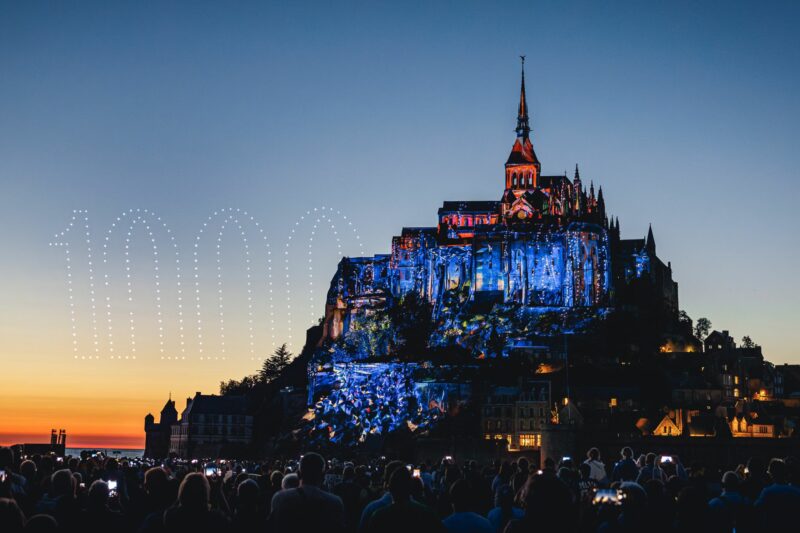
VLS regularly works on exceptional monuments. For the Millennium of the Mont-Saint-Michel in 2023, we were chosen as the technical partner alongside Ateliers BK and the Centre des monuments nationaux. During the Solstice on June 23rd, 36 laser video projectors and 20 Ayrton Cobra moving heads illuminated the silhouette of the abbey, revealing every facet of this UNESCO World Heritage site. A unique spectacle for a thousand-year-old monument.
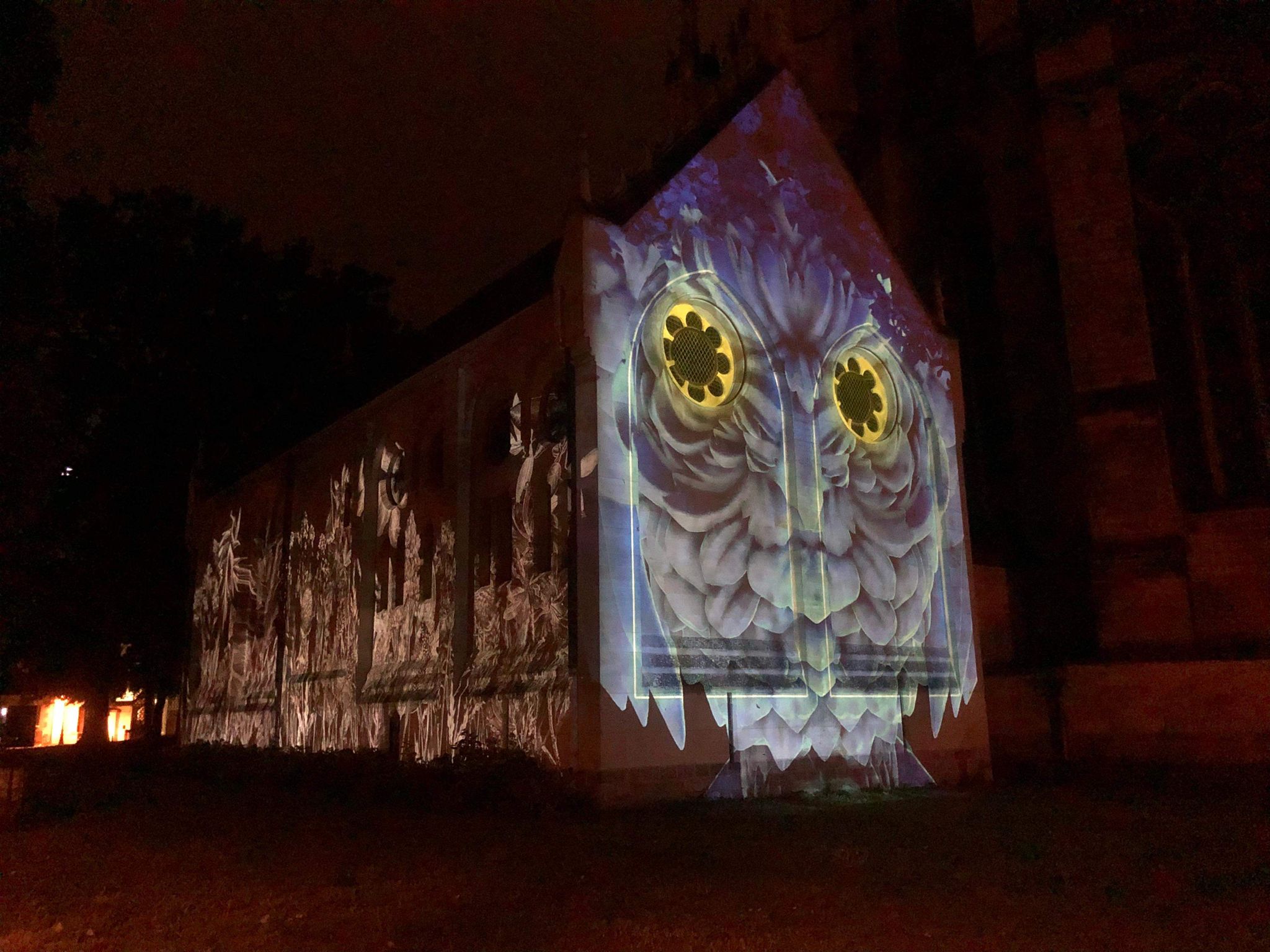
In Amiens, we have been supporting the show Chroma by Spectre Lab on the facade of the Notre-Dame Cathedral for several years. Our mission: to align images with extreme precision against the Gothic architecture and create an immersive soundscape in the square. In 2022, the experience even extended to the Parc de l'Évêché with Chroma 2, a walking tour where gargoyles and trees came to life—a production that was part of Amiens' bid for the title of European Capital of Culture 2028.
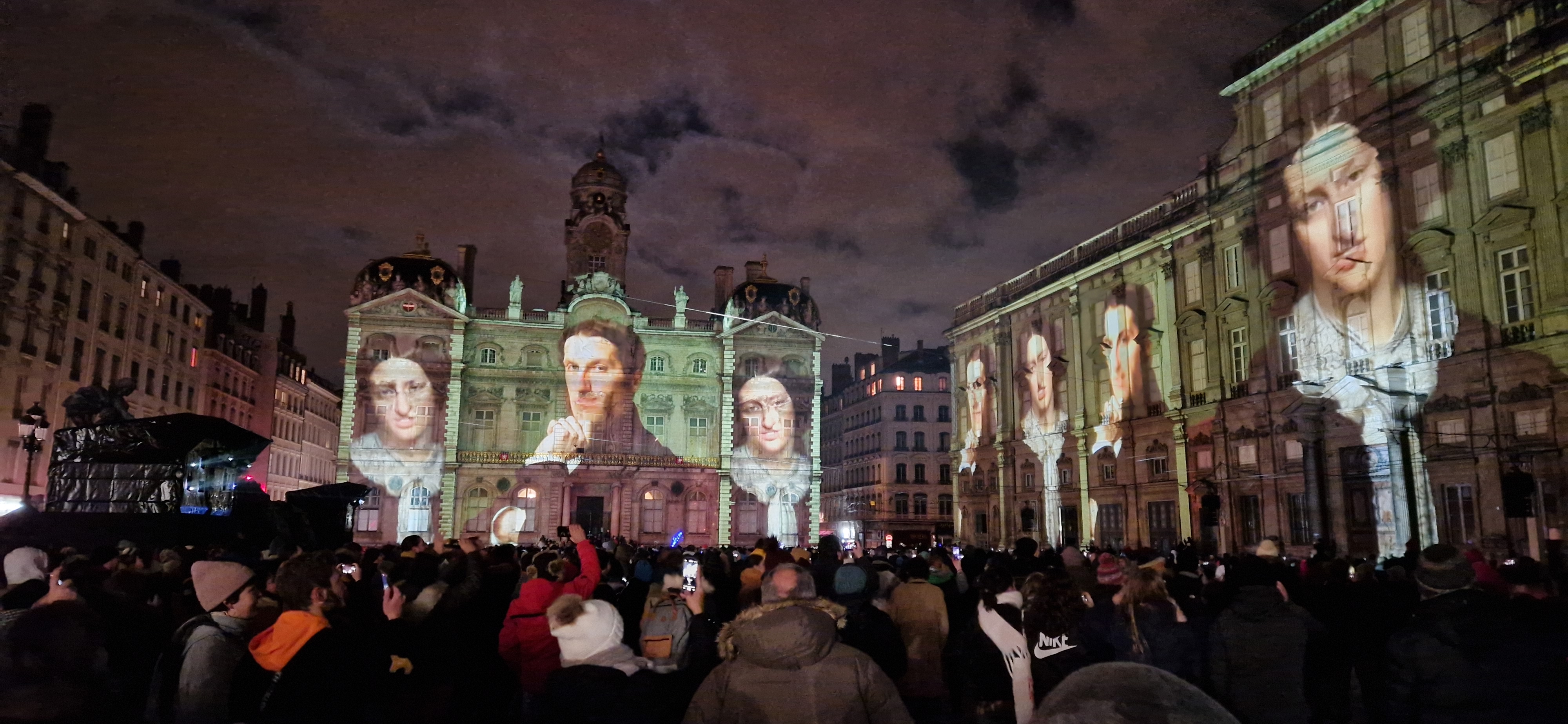
Finally, during the 2022 Lyon Festival of Lights, our teams projected Grand Mix in the Place des Terreaux Grand Mix, a work by the artist INOOK that combined portraits from the Museum of Fine Arts with deepfake technology to make painted faces sing. The result: the Trophée des Lumières, awarded by the public from among 13 competing creations.
Art and installation: a medium in its own right
Video mapping is also an artistic language in its own right. Far from commercial applications, some projects are born from a collaboration between technicians and artists to explore the relationships between space, light, memory, and the identity of a place. It is in this spirit that VLS supported artist Marie-Jeanne Gauthe for the sound and light show in the village of Évolène, in French-speaking SwitzerlandTailor-made to showcase the history and heritage of this Valais municipality, the project transformed the town center into an immersive and unifying experience that is both technical and deeply human. Every detail of the installation was designed to respect the environment and the peace of local residents, while creating a powerful draw for the region. It is a demonstration that video mapping, in the hands of an artist and a dedicated technical team, can become a true tool for cultural and regional development.
Video mapping equipment: what you need to master
The choice of equipment directly determines the quality and feasibility of a projection mapping project. Here are the essential technical parameters to master before launching a project.
1. Projector light output. This is measured in ANSI lumens. For indoor mapping in a dark room on a 50 m² surface, 10,000 to 15,000 lumens are sufficient. For an exterior facade of 200 m², you will need to deploy several projectors of 20,000 to 30,000 lumens each. Underestimating light requirements is the most common and costly mistake to correct at the last minute.
2. Resolution and projection distance. Image sharpness depends on both the projector's resolution and the projection distance. A native 4K projector offers optimal quality for surfaces up to approximately 100 m². Beyond that, overlapping multiple projectors (edge blending) is necessary, which requires high-performance mapping software to ensure image continuity at the seams.
3. Mapping software. MadMapper is appreciated for its quick learning curve on medium-sized projects. Resolume Arena and Disguise are industry standards for complex, real-time, multi-projector productions. HeavyM stands out for its artistic focus and integrated content library.
4. Managing ambient light. Unlike an LED screen that generates its own light, a video projector depends on ambient darkness. Outdoors during the day, even the most powerful projectors struggle to produce a satisfactory result. Video mapping is therefore essentially a nighttime or controlled-room technique.
5. Calibration time. Precise mapping on a complex surface can require 4 to 12 hours of on-site calibration. This constraint is often underestimated in event planning. You must always schedule access to the venue for technical teams the day before.
- Projector power : size according to the surface area and ambient light.
- Mapping software : MadMapper (medium projects), Disguise (complex productions), HeavyM (artistic creation).
- Edge blending : necessary as soon as multiple projectors cover the same surface.
- Calibration time : allow 4 to 12 hours depending on the complexity of the surface.
- Hardware backup : a backup projector is essential for any professional event.
How to choose your video mapping provider
Choosing a video mapping provider involves much more than just the price tag. Here are five questions to ask before signing.
First question: have they worked on a surface similar to yours before? A baroque facade requires different skills than a modular concert stage. Ask for specific references, not just a general portfolio.
Second question: do they have an in-house team? The best results come from teams where creative and technical staff work together from the design phase, rather than multiple subcontractors assembled at the last minute.
Third question: how do they handle the unexpected? A projector failing 20 minutes before the show happens. Explicitly ask about their hardware backup policy and how many technicians will be on-site the night of the event.
Fourth question: do they offer a preliminary simulation? A reliable provider will always offer a digital render before final production, allowing you to validate creative choices without any surprises on-site.
Fifth question: are they proficient in video capture? A video mapping show that isn't captured correctly loses half its value. Post-event digital distribution should be planned from the design stage, not added as an afterthought on the day of the event.
Frequently asked questions about video mapping
What exactly is video mapping?
Video mapping is a projection technique that aligns video animations with the precise geometry of a 3D surface—such as a facade, object, or stage set—to create an optical illusion where the physical surface appears to come to life. It combines technical expertise (hardware, software, calibration) with visual creativity.
What budget should be planned for a video mapping project?
An entry-level indoor project on a small surface (20-50 m²) can start around €5,000 to €15,000 for a full-service package. An outdoor facade show on a medium-sized building typically ranges between €30,000 and €100,000. Large-scale heritage productions or high-end brand activations can exceed several hundred thousand euros. The budget depends on the surface area, the duration of the show, the creative complexity, and the number of projectors required.
Is video mapping possible in daylight or outdoors?
Video mapping is by nature a nighttime technique or one suited to environments with controlled lighting. Outdoors during the day, even the most powerful projectors (30,000+ lumens) cannot compete with sunlight. For outdoor activations in natural light, LED screens remain the more suitable solution. Twilight or nightfall are the ideal conditions for an architectural mapping show.
How long does it take to prepare a video mapping project?
The complete preparation for a video mapping project generally spans 4 to 12 weeks, depending on complexity. Modeling the surface and creating the content account for the bulk of the work. On-site calibration requires an average of one full day, sometimes two for large facades. Anticipating timelines is fundamental: video mapping is not something that can be ordered 10 days in advance.
Can video mapping content be reused on other surfaces?
Content created for video mapping is, by definition, tailored to the geometry of a specific surface. It is not directly transferable to another building or object. However, video recording of the show produces content that can be used across all communication channels: social media, websites, print media, and sales presentations. It is this recording that ensures the longevity of the investment.
What is the difference between video mapping and standard projection?
Standard projection displays an image on a flat, neutral screen. Video mapping incorporates the physical surface as an integral part of the show: the reliefs, edges, and recesses of the building or object become active graphic elements. It is this interaction between the projected image and the actual geometry that creates the optical illusion characteristic of mapping.
In summary: how to succeed with a video mapping project
Video mapping is a high-impact visual communication tool, provided it is approached with rigor and foresight. The choice of surface, projector power, creative quality of the animations, calibration time, and video recording are all interdependent variables that determine the success of a show.
For indoor events with controlled lighting, a reasonably sized setup produces spectacular results at an accessible cost. For outdoor nighttime facades or large heritage productions, video mapping reveals its full potential but requires preparation and expertise that match the ambition.
One thing remains the same regardless of the project scale: a successful video mapping project begins with a clear definition of objectives, long before discussing equipment or budget.
Are you planning a video mapping project? We support you from conception to the final light-up. A proposal within 24 hours.
Read also: LED screen or video projector: how to choose for your event?
