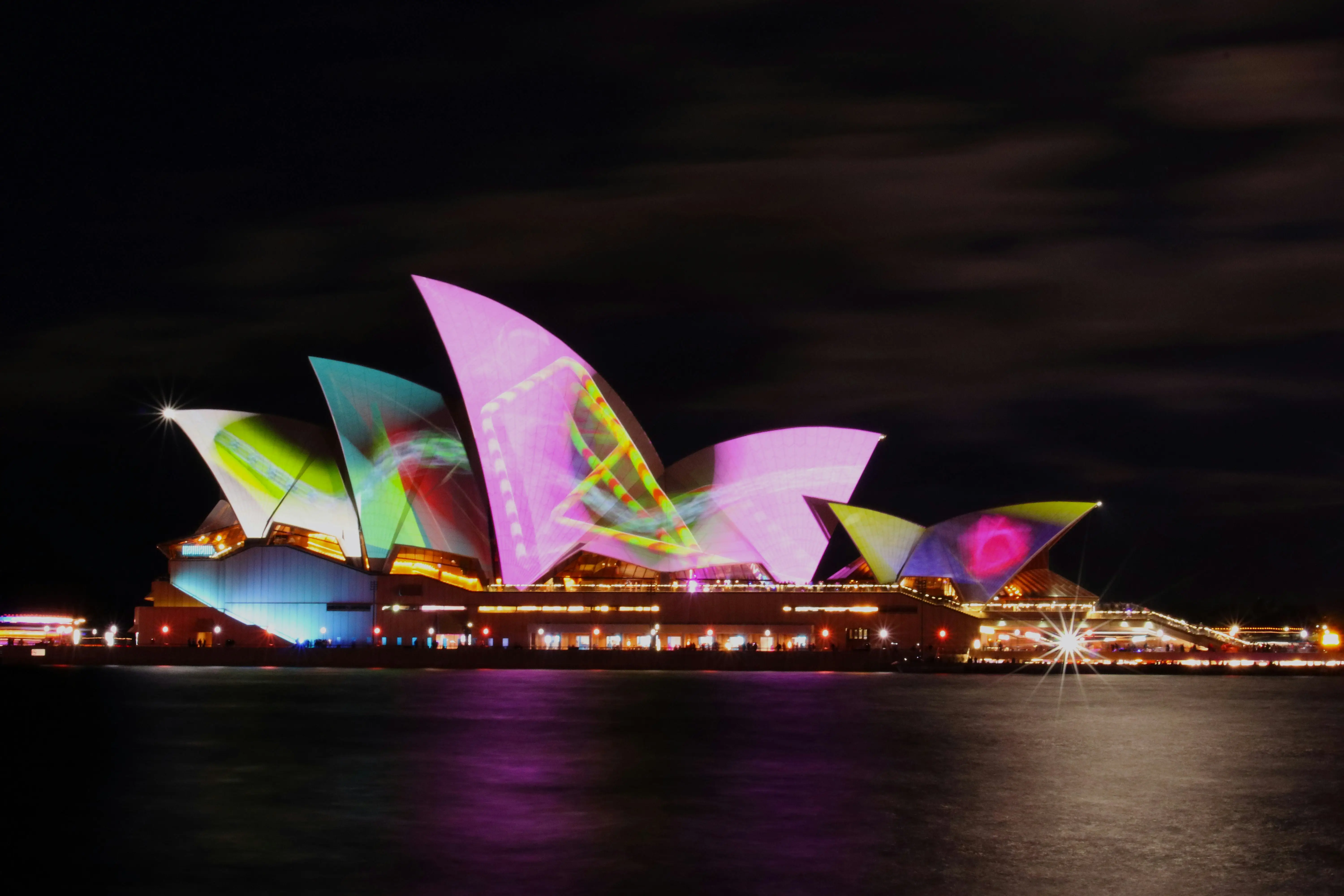

3D mapping is a video projection technique that fits images precisely onto the relief of a real surface, such as a building facade, a sculpture or a stage set, to create a powerful visual illusion of depth, movement and transformation. Unlike flat projection onto a screen, it turns any architecture or object into a living canvas.
Also called video mapping or projection mapping, 3D mapping has become a centrepiece of large-scale events, product launches and cultural installations. This guide covers its definition, the step-by-step technical process, the equipment required and the contexts where it delivers the strongest impact.
What is 3D mapping, exactly?
3D mapping is the art of projecting custom video content that is geometrically aligned to the contours, angles and relief of a physical surface. When done correctly, the result is a trompe-l'oeil effect: the eye perceives depth, volume changes and surface transformations that do not physically exist. A flat stone facade can appear to crumble, fold, flood or burst into light.
The term "3D" does not mean the audience wears 3D glasses. It refers to the fact that the projected content is designed and warped to match the three-dimensional geometry of the support, so the illusion holds from a chosen viewing axis without any special eyewear.
3D mapping vs. flat projection vs. video mapping: what is the difference?
These three terms are often used interchangeably, but they do point to distinct approaches:
- Flat projection sends a standard image onto a flat, neutral screen or surface. No geometry compensation is needed. Think of a cinema screen or a conference presentation.
- Video mapping is the broader category: any projection that is adapted to a non-standard surface shape, including flat but irregular surfaces (a car bodywork, a set piece). It can be purely 2D in its visual treatment.
- 3D mapping goes further by deliberately exploiting the relief of the support to create a volumetric illusion. The content is designed to reinforce or subvert the physical geometry, producing the depth illusion that gives the technique its name.
For a detailed comparison of these approaches, see our article on video mapping vs. 3D mapping.
How 3D mapping works: the step-by-step process
3D mapping is a multi-phase technical and creative workflow. Each phase must be executed precisely for the illusion to hold on show night.
Step 1: survey and 3D modelling
Before any content is created, the projection surface is measured and modelled. For a building facade, this typically involves a photogrammetry scan or a total-station survey to produce an accurate 3D mesh. The resulting model is imported into a 3D software environment (Cinema 4D, Blender or a proprietary pipeline) where it becomes the canvas on which content is mapped virtually. Accuracy here is critical: a 10-centimetre discrepancy between the virtual model and the real surface will be visible to the audience as a misalignment.
Step 2: content creation and visual design
Designers and motion artists work inside or on top of the 3D model to create sequences that play with the surface geometry. They might design a brick wall that cracks and reveals lava beneath, or a column that appears to stretch toward the sky. The content is rendered in layers corresponding to the zones of the surface, so the media server can handle them independently during the show.
Step 3: warping and alignment
On site, each projector's output is warped (geometrically distorted) so that when the light lands on the uneven surface, it appears undistorted from the audience viewpoint. Dedicated warping software, often integrated into the media server, handles lens correction, keystoning, edge blending between multiple projectors and fine-grained mesh adjustments. This calibration step, called soft-edge blending, ensures that two adjacent projectors create a seamless image across their shared zone.
Step 4: media server and show control
The media server is the heart of the system. It plays back the pre-rendered or real-time generated video content, applies the warping maps, synchronises audio, triggers lighting cues and, on complex shows, responds to timecode or live inputs. Professional media servers (d3/disguise, Pandoras Box, Green Hippo, Resolume or similar) can handle multiple outputs at very high resolutions, manage redundancy for live events and allow real-time tweaks during rehearsal. Show control is typically handled via a dedicated timeline or a lighting-desk integration, ensuring that projection, sound and lighting remain frame-accurate.
Applications of 3D mapping
3D mapping is a versatile technique whose impact scales from intimate product reveals to city-wide spectacles. Below are the main contexts where it is deployed.
Monumental facade mapping
The most iconic form of 3D mapping involves projecting onto the exterior of a large building: a cathedral, a town hall, a historic monument or a corporate headquarters. The scale of these installations, sometimes covering several thousand square metres of facade, requires very high-lumen projectors (50,000 lumens and above for the largest surfaces) and careful pre-production. The results are spectacular and attract significant public attention. For more on large-format outdoor shows, visit our guide to monumental 3D mapping on buildings.
Product launches and brand events
Brands use 3D mapping to unveil a product (a car, a luxury item, a new packaging design) in a way that is impossible with conventional display. The object itself becomes the projection surface, animated from every angle in a choreographed sequence. The technique transforms a product presentation into a sensory experience and generates strong organic social-media coverage.
Stage and event scenography
Concert tours, award ceremonies, corporate galas and theatrical productions use 3D mapping to replace or augment physical scenery with dynamic video environments. Set pieces, shaped screens, performer costumes and even the stage floor can all become projection surfaces, giving directors infinite flexibility to change the visual environment from scene to scene without a physical set change.
Trade show and exhibition booths
On exhibition floors, a booth enhanced with 3D mapping immediately differentiates itself from neighbouring stands. A mapped product or architectural model draws visitors in and communicates brand identity in a memorable, wordless way. The relatively compact scale of a trade-show booth also makes it accessible for brands that want to explore 3D mapping without the budget of a monumental outdoor show.
Museum and permanent installations
Museums and cultural institutions deploy 3D mapping as an interpretive tool: historical buildings can appear as they once were, artefacts can be animated to explain their origins, and immersive environments can transport visitors to another time or place. Permanent installations require particularly robust equipment choices and a media server infrastructure designed for continuous operation.
Applications at a glance: comparison table
| Application | Typical surface | Scale | Key requirement | Main benefit |
|---|---|---|---|---|
| Monumental facade | Historic building, corporate HQ | Very large (500 m2+) | High-lumen projectors, night event | Maximum public impact |
| Product launch | Vehicle, object, packaging | Small to medium | Precise 3D model of object | Memorable reveal, social reach |
| Stage scenography | Stage, set pieces, floor | Medium to large | Timecode sync with lighting and audio | Infinite scenery flexibility |
| Exhibition booth | Booth structure, product model | Small | Controlled ambient light | Stand differentiation |
| Museum installation | Artefact, architectural element | Variable | Continuous operation reliability | Interpretive depth, immersion |
Equipment involved in a 3D mapping setup
A professional 3D mapping installation brings together several specialised technologies. Understanding the role of each component helps in evaluating proposals and planning a project.
Projectors and lumen output
The projector is the most visible component. Lumen output is the primary specification because it determines how bright the image remains against ambient light and at what projection distance. A small indoor product reveal may be served by a 10,000-lumen laser projector, while a monumental facade show can require several units of 50,000 lumens or more, stacked or blended to cover the full surface. Laser-phosphor technology has largely replaced lamp-based projectors in professional contexts, offering greater stability, longer service life and better colour consistency across the show run.
Media server
The media server manages playback, warping, blending and show control. It must handle the aggregate pixel count of all projector outputs simultaneously, often at high frame rates to avoid stroboscopic artefacts on fast-moving content. Redundancy (a second server on hot standby) is standard practice for high-stakes live events.
Warping and blending software
Whether built into the media server or running as a separate layer, warping software applies the geometric correction that makes the projected image align to the surface. It also manages soft-edge blending between adjacent projectors, fading one output into the next over an overlap zone so the seam is invisible to the audience.
Structural rigging and projection infrastructure
Projectors must be positioned at precise distances and angles relative to the surface. This requires structural rigging (towers, trusses, cherry-pickers or building-mounted brackets), cabling infrastructure and sometimes temporary platforms. Site access, weight loads and safety regulations all influence the structural design, particularly for outdoor monumental shows in public spaces.
Power distribution
High-lumen projectors are power-hungry. A multi-projector outdoor show will often require a dedicated power generator or a connection to a reinforced mains supply, with distribution boards sized to the load and circuit protection appropriate for an outdoor environment.
Conditions for a successful 3D mapping show
3D mapping is a demanding technique that rewards careful site analysis and pre-production. Several environmental and technical factors determine whether the result meets expectations.
Darkness and ambient light control
Projected light competes with ambient light. Outdoor monumental shows are almost always scheduled at night, after civil twilight, to maximise contrast. Indoor events benefit from blackout conditions or at minimum a significant reduction in ambient illumination. The higher the ambient light level, the higher the lumen output required to maintain image quality, which has direct implications for equipment choice and budget.
Surface characteristics
Light-coloured, matte surfaces reflect projected light evenly and produce the best image quality. Dark stone, heavily textured brick or glass facades absorb or scatter light and require higher lumen compensation. Highly reflective or glossy surfaces create hotspots and are generally avoided unless the optical effect is intentional. A surface survey before pre-production ensures that the content is designed with the actual reflectance characteristics in mind.
Projection distance and throw ratio
The distance between the projector and the surface, combined with the lens throw ratio, determines the image size at a given lumen density. Longer distances mean the light spreads over a larger area, reducing brightness per square metre. Pre-production calculations must verify that the chosen projectors, at the planned positions, deliver sufficient brightness across the entire mapped surface.
Accuracy of the surface model
As noted in the workflow section, the 3D model of the surface must be accurate to within a few centimetres for the warping to produce a convincing illusion. Any significant deviation between the model and reality will appear as a misalignment where the projected content does not sit correctly on the physical surface. For complex or organic shapes, photogrammetry or laser scanning provides the most reliable starting point.
The immersive experience: why 3D mapping works
3D mapping succeeds as a medium because it exploits fundamental mechanisms of human visual perception. When projected light appears to respect the geometry of a surface, the brain reads the image as physically real. The trompe-l'oeil effect is heightened by motion: a static misaligned image reveals its artificiality, but a sequence of well-designed animations that interact with the physical relief continuously resets the viewer's expectation and sustains the illusion.
The absence of a frame is equally important. Unlike a cinema screen, a mapped building or object has no visible boundary to remind the audience they are watching a projection. The image appears to belong to the architecture, which produces a sense of wonder that conventional display cannot replicate. This perceptual quality explains why 3D mapping generates strong emotional responses and high social-media amplification at events where audiences share what they witness.
For event producers and brand communicators, this translates into measurable outcomes: dwell time, media coverage, social impressions and audience recall all tend to be significantly higher for 3D mapping activations than for equivalent conventional display.
VLS and 3D mapping: more than 40 years of technical expertise
VLS has been designing and delivering large-format audiovisual installations since 1983, and 3D mapping has been part of the company's expertise from the early days of the technique in France. Based in Buc, in the Yvelines department of the Ile-de-France region, VLS combines in-house engineering, a rental fleet of professional projectors and media servers, and a production team experienced in monumental outdoor shows as well as indoor event scenography.
Every project begins with a technical feasibility study: surface survey, lumen calculation, structural constraints, power audit and content pipeline review. This upstream rigour is what makes it possible to guarantee that the show delivered on the night matches what was promised in pre-production. You can browse past productions on the VLS portfolio page, and explore our large-format image expertise at grande image expertise.
To discuss a specific project, contact the VLS team for a technical consultation.
Frequently asked questions about 3D mapping
What is the difference between 3D mapping and a simple video projection?
A simple video projection sends an image onto a flat, neutral screen with no geometric adaptation. 3D mapping goes further by fitting the projected content to the exact relief and shape of an irregular surface, such as a building facade or a sculpted object. Specialised warping software distorts the image before projection so that it appears perfectly aligned from the audience's viewpoint, creating a depth illusion impossible with standard projection.
How long does it take to produce a 3D mapping show?
Production timelines vary considerably with scale and complexity. A modest indoor installation may be designed and rehearsed in a few weeks. A monumental outdoor show involving a historic facade typically requires several months of pre-production: surface survey, 3D modelling, content creation, equipment procurement, structural engineering and permit applications. Scheduling the pre-production lead time correctly is one of the most critical success factors for a 3D mapping project.
What surfaces are suitable for 3D mapping?
Almost any solid surface can be used, but results vary. Light-coloured, matte surfaces (stone, concrete, painted render) provide the best image quality. Highly textured surfaces add visual complexity that can work in favour of the illusion. Glass and glossy surfaces are challenging due to reflections and require higher lumen output to compensate for absorption and scatter. Dark surfaces similarly need more powerful projectors. A technical site assessment before pre-production is always recommended.
How much does a 3D mapping installation cost?
Budgets span a very wide range depending on the size of the surface, the number and power of projectors required, the duration of the show and the complexity of the content. A trade-show booth activation and a monumental city-centre facade show have very little in common technically or financially. For an indicative cost range based on your specific project parameters, see our article on 3D mapping costs or request a tailored quote from VLS.
Is 3D mapping possible indoors?
Absolutely. Indoor 3D mapping is in many ways more controllable than outdoor shows because ambient light can be managed precisely with blackout and the structural environment is stable. Indoor applications include product launches, gala dinners, concert stages, museum installations and corporate presentations. The lower ambient light indoors also means that projectors of more modest lumen output can deliver excellent image quality, which can reduce equipment costs compared to outdoor deployments.
Can 3D mapping be used in real time or interactively?
Yes. Beyond pre-rendered show playback, modern media servers support real-time rendering engines that respond to live inputs: sensor data, performer tracking, audience interaction via mobile devices or external data feeds. Interactive 3D mapping is increasingly used in brand experiences and permanent cultural installations. Real-time workflows require more powerful computing infrastructure and a more complex content pipeline, but they open up possibilities for personalised or participatory experiences that pre-rendered content cannot provide.
Read also: Video mapping vs. 3D mapping: what are the differences? | Monumental 3D mapping on buildings: techniques and examples | How much does a 3D mapping project cost?
